
On any given day, it can feel like you make a hundred decisions before lunch.
One way to simplify things is to reduce the number of decisions you make. Several years ago I somehow resolved to drink only black coffee and wear Lululemon clothes everyday.
I try to save most of my decision-making energy for work, where it’s natural to obsess over whether you make the right decisions. After a while I realized, “Did I make the right decision?” isn’t that helpful of a question.
Instead, I started to ask myself: “How do I make better decisions, faster?”
After taking a deeper look into some of this stuff, I started geeking out on decision-making models.
I admit: the stakes feel different now than when I was younger. I made decisions much faster then. Part of that was ignorance, part was recklessness, part was just youthful energy. If I goofed up, I had time and energy to course correct.
I have less course-correcting energy now, which has actually made me slower in making a call. These decision-making models have helped a ton.
Once I dove deeper into these, I found I was already following some of them naturally. You may find the same for you. But still, there’s a lot of power in naming these things.
#1: Two-Way Doors vs. One-Way Doors
Some decisions are one-way doors: selling a company, getting married, getting divorced, moving across the world, changing careers. Sure, they’re not always irreversible, but they are very painful and costly to reverse.
Other decisions are two-way doors: trying a new drink, testing a price increase, and if you’re in my line of work, trying a new content format. The bottom line is that if whatever you’re trying isn’t sticking, you can always go back.
Most decision-making paralysis comes from treating two-way doors like one-way doors.
For example, I spent six months debating whether to start this newsletter. Should I consolidate all my content here instead of spreading across multiple platforms? Are people gonna hate it? Is this the right call? In reality, this was a two-way door that I treated like a commitment for all eternity.
That said, the path to a one-way door can often be made up of a series of two-way door decisions. Dating that leads to marriage comes to mind, as does one of my recent projects and partnerships.
A few years ago, I asked my friend Andy Storch if he’d be open to writing a book together. Writing a book together is a one-way door: if we agreed to it, there was no real backing out.
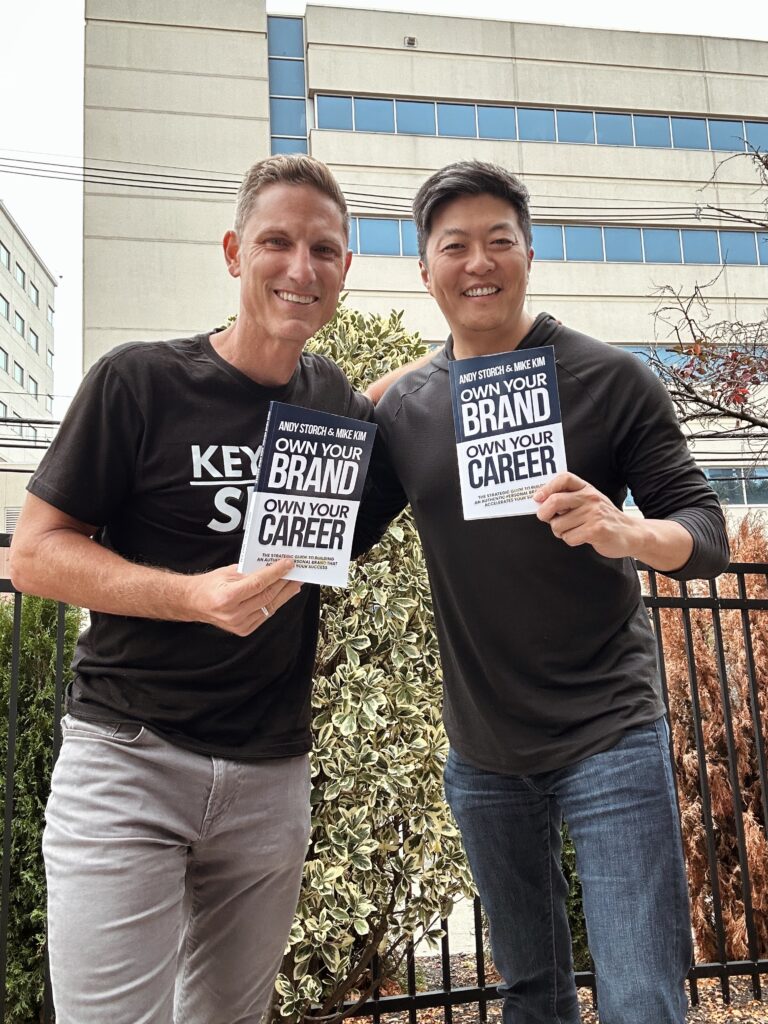
But before I popped the question, I spent about a year making a lot of two-way door decisions.
First, I wanted a partner who had already been through the book-writing process. Andy also had a ton of other marketing experience: he was already a best-selling author, hosted two podcasts, and had done a ton of speaking, webinars, and virtual summits. Because of that, I knew we could direct most of our energy towards writing a good book. Awesome!
Obviously, things can be different when actually working with someone, so I quietly observed how Andy moved and carried himself. We spent a year together in one of my masterminds and I noticed how he showed up for others and how he engaged on calls.
During that time, something happened that really showed me another side of his character. A few years ago I held a small workshop in Florida and asked him to speak. Andy flew in from Barcelona to do the talk but unfortunately, he got sick and had to hole up in his hotel. Despite being sick, it still felt like Andy was at the event –– he treated my event as if it was his own.
This spoke volumes to me about his commitment and the kind of person he was. When the moment felt right, I popped the question about writing a book together… and all those two-way doors became a one-way door.
During our book writing process, we made a few two-way door decisions to stress-test our content. We hosted a few webinars together, tested our material with live audiences, and we co-presented at his conference, Talent Development Think Tank. All of these made for a great creative process together.
We’ve now launched our book, Own Your Brand, Own Your Career (you can get it here on Kindle for $0.99 and paperback for $9.99 until October 1st) – we hit number one in career development on Amazon, sold hundreds of copies in our first week, and the momentum has been great so far.
This whole experience showed me the power of using two-way doors to inform your one-way door decisions and make a bigger bet.
Key insight: Move slowly on one-way doors. Move fast on two-way doors.
#2: The Lindy Effect (and Why I Write Books)
The Lindy Effect is a filter: the longer something has endured, the more likely it will keep enduring.
“Lindy” has a quirky origin. The term originally comes from Lindy’s Deli (now gone :/) in New York City. In the mid-1900s, comedians and showbiz people would hang there and noticed something: the longer a Broadway show had already run, the more likely it was to keep running. They’d say: “That show is Lindy”… meaning it had staying power.
This concept resonates with because it connects to material consequence: the idea that some things are tangible, lasting, and real in a way that digital stuff isn’t.
I prefer tangible things. I’m an 80s kid and grew up in a very physical world. My toys were actual objects, Transformers that I could change from cars to robots and back again. I played a lot of sports: I loved baseball (was terrible at it) and basketball (started for my high school team) and I fell in love with live sporting events.
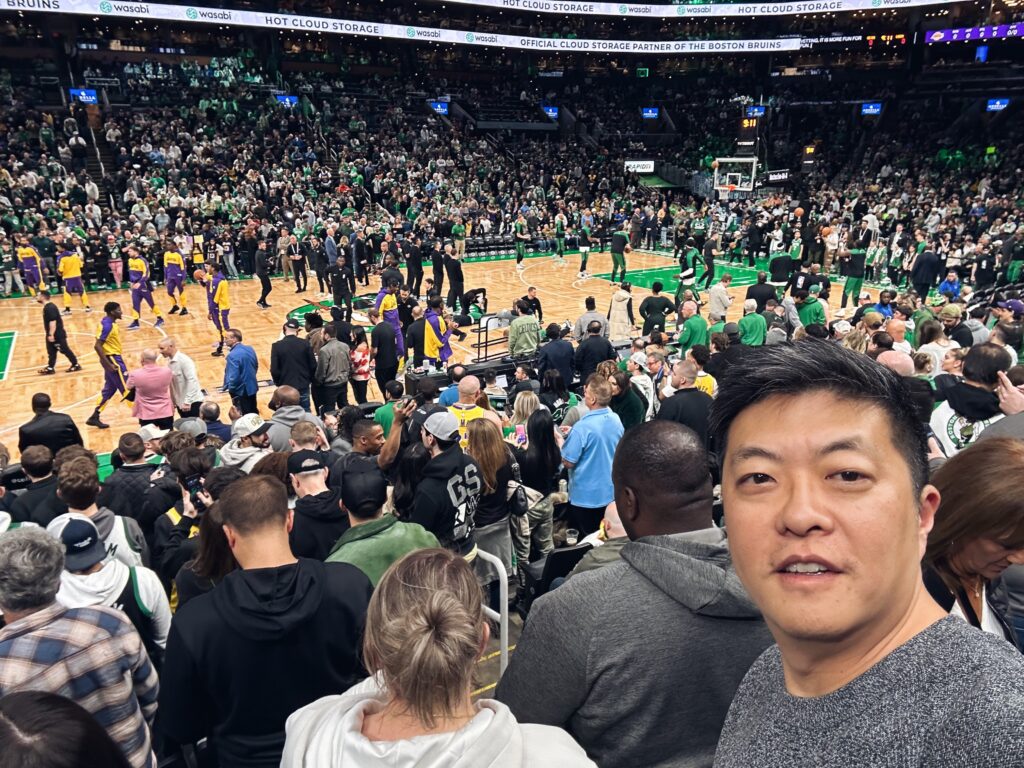
I will sometimes splurge on playoff games or the chance to see the all-time greats just to soak up the energy and be in that kind of environment. My last splurge was dishing out last-minute cash to watch the Lakers play in Boston where I got to see LeBron, Luka Doncic, Jaylen Brown, and Jayson Tatum, all in one night. (For the record, I hate both teams.)
Most of my work has been to help people market and monetize their expertise using the principles of personal branding. There are plenty of people in my industry who focus only on digital products and online courses, but back in early 2024, something changed my perspective completely.
I was invited by my friend Sean Osborn to an exclusive mastermind in Chicago with Russell Brunson, one of the best-known marketers in my industry. I don’t necessarily love Russell’s marketing style, but he said something that lit a fire in me:
“No one has ever told me that my course changed their life, but they have told me my books have changed their lives.”
That hit different. Books are one of the few things that tend to outlive their authors. They’re Lindy.
So, I decided to go full Lindy in my work and really commit to writing books. They’re physical. They endure. They have material consequence, AI be damned.

Around that same time, several things converged in my life. Being in my mid-forties, I was thinking a lot about legacy. A few months before that trip, I ended a relationship where I came to terms with not likely having kids in this lifetime. My dad was diagnosed with cancer right around that time, too.
When I flew to Korea this past May to take care of matters after he passed, I didn’t see my blog open on his laptop screen… I saw my books on his couch.
One of the sneaky things that can make us feel really empty and unfulfilled in this digital age is that the things we create just live in a cloud. I’ve never once sat down and looked at my Google Drive cloud and said, “Wow, look at this amazing body of work!”
I’ve been ringing this bell pretty loudly in the ears of my closest clients: write your book. Stop chasing vanity metrics or social media trends. Go Lindy or struggle forever.
Key insight: Go Lindy and build things with material consequence.
#3: The “Chick Test”
I’m sure there’s a better name for this—regret minimization or something like that—but this is my way of making it personal.
This mental model is named after my mom’s husband, Charles, whose nickname is Chick. (I have no idea he got that name, haha). Chick is 89 years old now and unlike the stereotype of cranky old people, Chick loves life.
I’ve been able to spend a lot of time with my mom and Chick through the years. After I got divorced back in 2018, I hunkered down with them for weeks at a time between travel and trying to find my bearings again. Those were untethered days, but also some of the most adventurous of my life.
When I’d come back from whatever trip I’d been on, Chick and I would have wine with dinner and I’d regale him with stories of how I raced along the Chao Phraya River in Bangkok, how my friends and I visited a famous club in London, or how I went to a private version of Burning Man in New Mexico.
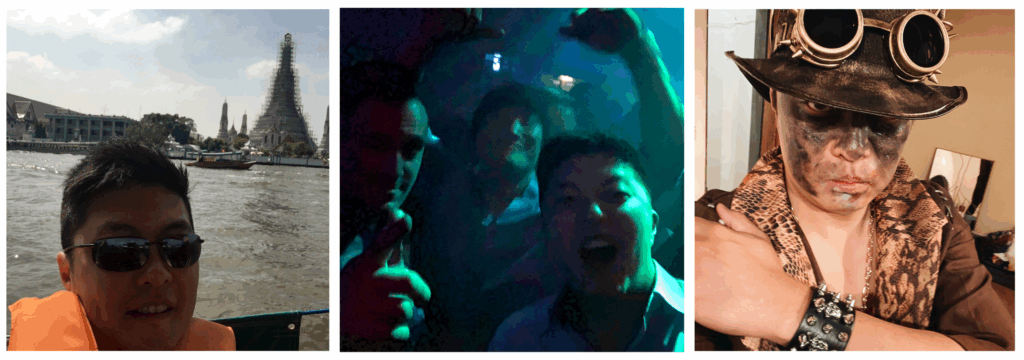
Chick would listen with intense interest, asking about every detail, and then bellow out this hearty laugh that always felt like a mix of joy and envy. “Michael! You’re really living life!”
At first I thought Chick just wanted to relive his own glory days, but after getting to know him more I realized he started life kind of late.
Chick was a veteran who got shot while serving as a chaplain during Vietnam, then became an Episcopal priest until his mid-50’s. When he resigned his credentials, he was finally allowed to get married and I guess he was hellbent on making up for lost time: my mom is his third wife!
I can tell Chick wishes he had seen more of the world before he got older. So, when opportunities come up, I use the Chick Test a lot:
Will I regret not doing [this] looking back on my life when I’m Chick’s age?
The Chick Test (plus the Lindy Effect) helped drive me to write more books. The Chick Test helped me say yes to an opportunity to move to Florida and work with leadership expert John Maxwell, just six weeks after I got divorced. It pushed me to try building a marketing agency, and to go to that mini-Burning Man, haha.
Not all of these worked out but I’m glad I tried them. Had I not, I wouldn’t have made core memories like carousing through Bourbon Street after a speaking engagement in New Orleans with Chick and my mom. Watching Chick and my mom get down with random girls on a stage at some dive bar was something I never thought I’d see. The girls even put dollar bills in his pocket (thank God, he kept his clothes on).

The Chick Test drove me to go to Uganda earlier this year and finally do a safari trip, even though the timing was tough for me. The Chick Test drove me to re-establish a relationship with my dad and visit him, once in Hawaii and then again in Seoul. When he passed in May, I had zero regrets because we had made our peace and were in each others lives for at least a few years.
(I share a lot of my Dad’s story in Issue #01, Good Grief – and my speech at Justin Schenck’s event, which you can watch on YouTube.)
My friends have told me I’ve lived a lot of life in my four and a half decades, and the Chick Test is one of the main reasons why.
Give yourself the gift of knowing you tried what you wanted. That you’ve left it all on the field. That you really gave that idea, opportunity, or relationship a real chance.
Key insight: At eighty-nine, what will you wish you had done? Do that.
***
I don’t know which decision you’re wrestling with right now, but consider these decision-making models. You might be surprised how clear things become.
Speaking of the Chick Test—if you’re sitting on a book idea, wondering if you should finally write it, you might already know the answer. At 89, you’ll probably regret not getting those ideas out of your head and onto paper. Later this fall, I’m thinking of hosting an accelerator for those to ideate, write, and market their book. If you’re interested:
Get on the Waiting List here »
If you’d like to connect on any other channels and content formats, my links are here: